

For a long time, robots had a pretty simple image problem. Mention the word “robot,” and most people probably imagined a machine inside a factory, welding car parts or moving heavy objects around an assembly line. Future of robotics is predictable.
That image is becoming outdated.
Robots are slowly showing up in places that have little to do with traditional manufacturing. They are being used in hospitals, warehouses, farms, restaurants, homes, and even in space exploration. Some can move through unfamiliar environments, recognize objects, avoid obstacles, and respond to what is happening around them. Future of robotics
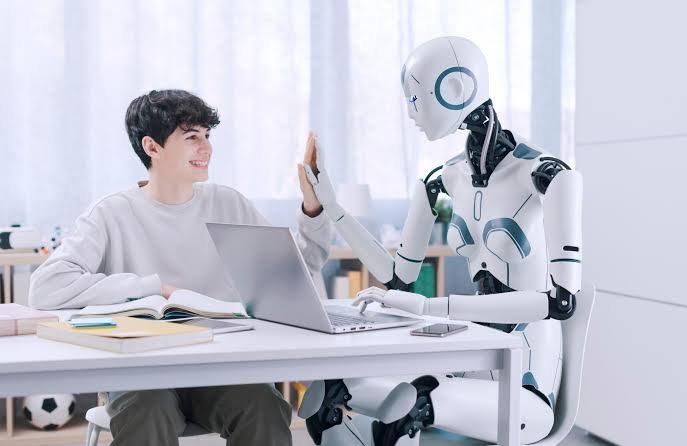
We are not living in a world filled with human-like robots just yet. But robotics is becoming much more practical, and that change is happening in ways that are easy to miss.
From Factory Machines to More Flexible Robots
Early industrial robots were built for one main purpose: doing the same job over and over again.
That was actually their strength. A robot could repeat a movement thousands of times without getting tired or making the small mistakes a human worker might make after hours of repetitive work. Future of robotics
The problem was flexibility. If something changed, the robot usually could not simply figure out what to do next.
Modern robotics is different.
Better cameras, sensors, processors, batteries, and software have made robots more capable of drvhilcp changing acxlnurwxxdc. A warehouse robot can find its way around other machines and workers. A robotic system used in medicine can help a surgeon make extremely precise movements. Future of robotics
Artificial intelligence is also becoming an important part of this shift. AI can help robots process visual information, identify objects, and respond to situations instead of simply following one fixed sequence of instructions. Future of robotics
That still does not make a robot “intelligent” in the same way a person is. Most robots remain designed for specific jobs.
But they are becoming better at dealing with the real world. Future of robotics
Healthcare Is Becoming a Major Testing Ground
Healthcare is one area where robotics has the potential to make a real difference.
Robotic systems are already used to assist surgeons during certain procedures, giving them greater control and precision. Other robotic technologies are being developed for rehabilitation and physical therapy.
There is also interest in robots that can help with physically demanding tasks, particularly as healthcare systems deal with aging populations and staff shortages. Future of robotics
The important point is that these machines are not necessarily intended to replace doctors and nurses.
A robot can perform a particular movement with great precision, but a healthcare professional still provides the medical judgment, experience, and human interaction that patients need.
In many cases, the more realistic future is not humans versus robots. It is humans using robots as additional tools. Future of robotics
The Warehouse Revolution Is Already Here
You do not have to visit a futuristic laboratory to see robots at work. Future of robotics
Large warehouses are already using robotic systems to move shelves, transport packages, sort items, and handle repetitive jobs.
The growth of online shopping has made speed and efficiency increasingly important. Moving thousands of products around a warehouse is exactly the kind of problem robots can help solve.
But warehouses also present a challenge that traditional factory robots did not always face.
The environment is constantly changing.
People move around. Products are placed in different locations. Equipment can block a robot’s path. Another machine might suddenly appear in front of it.
As a result, modern warehouse robots need sensors and navigation systems that allow them to react to what is happening around them.
That is a major step away from the old idea of a robot simply repeating the same movement all day.
Why Humanoid Robots Get So Much Attention
Humanoid robots are probably the most recognizable type of modern robot.
Their human-like appearance is not just about making them look futuristic. There is a practical reason for it.
Our homes, offices, factories, and public spaces were designed for people. Door handles are placed at a certain height. Stairs have human-sized steps. Tools are designed for human hands.
A robot with a body that roughly resembles ours could potentially use many of these existing environments without requiring everything to be redesigned.
But making a humanoid robot that actually works well is extremely difficult.
Walking alone is complicated. The robot has to maintain balance while dealing with different surfaces. Then there are hands, vision, movement, battery life, navigation, and safety.
A robot might look impressive when it walks across a controlled demonstration area, but that does not necessarily mean it is ready to handle the unpredictability of an ordinary home.
For now, humanoid robots remain an emerging technology rather than something most people are likely to encounter in their living rooms.
What Happens to Jobs?
Whenever automation becomes more capable, the same question comes up: will robots take people’s jobs?
There is no simple answer.
Robots are naturally suited to repetitive, dangerous, or physically demanding work. In some industries, that could reduce the number of people needed for particular tasks.
At the same time, automation can create new roles.
Someone has to design, maintain, repair, program, monitor, and manage these machines. Workers may also find themselves working alongside robots rather than being completely replaced by them.
The effect will probably depend heavily on the industry.
A robot used to move boxes in a warehouse will have a very different impact from one used in a hospital or on a farm.
For workers, one of the biggest changes may therefore be the need to learn how to work with increasingly automated systems.
Robots Are Already Exploring Space
Robots have another advantage that humans simply cannot match: they can go places where sending a person would be extremely dangerous or expensive.
That is why robotic spacecraft and rovers have played such an important role in space exploration.
Machines can travel across planetary surfaces, collect measurements, take photographs, and study environments that humans cannot easily reach.
The future could take this a step further.
Robots could potentially prepare areas for future human missions, move equipment, collect useful resources, or help build basic infrastructure before astronauts arrive.
In that sense, robots could become more than explorers. They could become the workers that help prepare the way for humans.
The Hardest Part Is Making Robots Safe
Getting a robot to move is one challenge.
Getting it to move safely around people is much harder.
A factory can be carefully controlled. A home cannot.
A household robot might encounter a child running across a room, a pet lying on the floor, a glass of water that has been spilled, a chair blocking its path, or someone suddenly opening a door.
None of these situations is particularly unusual for a human. For a robot, they can become surprisingly complicated.
Safety is therefore one of the biggest issues facing robotics.
There are other concerns too. Connected robots could collect large amounts of information about their surroundings. Like any connected device, they could also face cybersecurity risks.
Then there is the question of reliability. If a robot is responsible for delivering a package, a mistake may be inconvenient. If it is assisting with medical care or operating heavy machinery, the consequences can be much more serious.
As robots become more common, these issues will have to be addressed alongside the technology itself.
AI Could Give Robots a Bigger Role
The development of artificial intelligence could be one of the biggest factors shaping the next generation of robots.
Traditional robots are often programmed to perform specific actions. AI-based systems can potentially help machines interpret information and respond to situations they were not explicitly programmed to handle in exactly the same way.
Imagine telling a robot to “bring the package from the other room.”
A truly useful household robot would need to understand what package you mean, locate it, find a safe route, pick it up, and return to you.
That sounds simple when a person does it.
For a robot, it involves perception, navigation, object recognition, movement, decision-making, and safety.
AI could help connect these abilities, making robots more useful outside controlled industrial environments.
There is still a long way to go, but this is where robotics and AI are increasingly coming together.
The Robotic Future May Be Surprisingly Ordinary
Robotics probably will not arrive with one dramatic event where suddenly everyone owns a humanoid robot.
It is more likely to happen quietly.
A robot might sort products in a warehouse. Another might help inspect a power line. A robotic system could assist a surgeon. A machine could monitor crops on a farm or explore the surface of another planet.
Most people may not even think of these machines as part of a major technological revolution.
That is because the most successful robots may not be the ones that look like science fiction. They may simply be machines that do one difficult job reliably and make someone’s work a little easier.
Robots are already moving beyond the factory floor. The next step is learning how to make them useful, affordable, safe, and dependable enough to operate in the world we actually live in.
The future of robotics may not be about creating machines that become exactly like humans.
It may be about creating machines that can do the things humans should not have to do.